Loading... Please wait...

Advanced Search | Search Tips


Ph: 0424 279 950


Cremation


Melbourne retail funeral products SHOP NOW OPEN TO THE PUBLIC!

Call 0424 279 950 to make an appointment- Open 7 days.

Why pay $3,500 - $5000 on a coffin when its going to be cremated? We sell high end solid timber coffins for under  $1,500.00.

CLICK HERE to see coffins and casket prices and photos.

Funeral Home Coffin/ Casket Costs. What to expect if you don't by from our online store

Basic coffins
Paper veneer chip board
or MDF coffin with cheap plastic handles $780- $2200

Solid timber coffins
Pine wood starting from $2700
Solid Oak timber coffin $4150.00. Caskets Direct sell solid oak coffins for under $1700. Click here

Funeral caskets $5,000- $11,800.00. We sell caskets for under $3000 Click here

Modern cremation process

The cremation occurs in a crematory (or crematorium), consisting of one or more cremator furnaces or cremation retorts for the ashes. A cremator is an industrial furnace capable of generating temperatures of 870-980 °C (1598-1796 °F) to ensure disintegration of the corpse. A crematorium may be part of chapel or a funeral home, or part of an independent facility or a service offered by a cemetery.

Modern cremator fuels include diesel,[2] natural gas, propane and in some areas like Hong Kong town gas.[3] However, coal and coke were used until the early 1960s.

Modern cremators have adjustable control systems that monitor the furnace during cremation. These systems automatically monitor the interior to tell when the cremation process is complete, after which the furnace shuts down automatically. The time required for cremation varies from body to body, and in modern furnaces may be as fast as one hour per 45 kilograms (99 lb) of body weight.

A cremation furnace is not designed to cremate more than one body at a time; cremation of multiple bodies together is illegal in the US and many countries. Exceptions may be made in special cases such as with stillborn twins, or a stillborn baby with a mother who died during childbirth. In such cases, the bodies must be cremated in the same container.

The chamber where the body is placed is called a retort and is lined with heat-resistant refractory bricks. The coffin or container is inserted (charged) into the retort as quickly as possible to avoid heat loss through the top-opening door. The container may be mounted on a charger (motorized trolley) that can quickly insert it, on a fixed or movable hopper that allows the container to slide into the cremator.

Modern cremators are computer-controlled to ensure legal and safe use. For example, the retort door cannot be opened until the cremator has reached its operating temperature, and United States federal regulations[4] require that newly constructed cremators feature dual electrical and mechanical heat shutoff switches and door releases accessible from inside the retort. Refractory bricks are typically replaced every five years, because thermal fatigue gradually introduces fissures that reduce the insulating strength.

Some crematoria allow relatives to view the charging. This is sometimes done for religious reasons, such as in traditional Hindu and Jain funerals.[5]

Most cremators are a standard size. Typically, larger cities have access to an oversize cremator that can handle deceased in the 200 kilograms (440 lb)+ range. Most large crematoria have a small cremator installed for the cremation of fetal and infant remains.

Body container

In the U.S., a body ready to be cremated must be placed in a container for cremation,[citation needed] which can be a simple corrugated cardboard box or a wooden casket (coffin). Most casket manufacturers provide a line of caskets specially built for cremation. Another option is a cardboard box that fits inside a wooden shell designed to look like a traditional casket. After the funeral service, the interior box is removed from the shell before cremation, permitting the shell to be reused.Funeral homes may also offer rental caskets, which are traditional caskets used only for the duration of the services, after which the body is transferred to another container for cremation. Rental caskets are sometimes designed with removable beds and liners, which are replaced after each use.

In the UK, the body is not removed from the coffin and is not placed into a container as described above.The body is cremated with the coffin, which is why all UK coffins that are to be used for cremation must be made of combustible material. The Code of Cremation Practice forbids the opening of the coffin once it has arrived at the crematorium, and rules stipulate it must be cremated within 72 hours of the funeral service. Thus, in the UK, bodies are cremated in the same coffin as they are placed in at the undertaker's although the regulations allow the use of an approved 'cover' during the funeral service.It is recommended that jewelry be removed before the coffin is sealed for this reason. After the cremation process has been completed, the remains are passed through a magnetic field to remove any metal, which will be interred elsewhere in the crematorium grounds, or increasingly, recycled. The ashes are then given to relatives or loved ones or scattered in the crematorium grounds where facilities exist.

In Germany, the process is mostly like in the UK. The body is cremated in the coffin, additionally, a piece of fireclay with a number on it is used for identifying the remains of the dead body after burning. The remains are then placed in a container called the ash capsule, which will in general be placed into a cinerary urn.

In Australia, the deceased are cremated in a coffin supplied by the undertaker or can be purchased for half the prices from Caskets Direct Pty.Ltd. Reusable or cardboard coffins are becoming popular, with several manufacturers now supplying them. If cost is an issue, a plain, particle-board coffin (known in the trade as a "chippie") will be offered. Handles (if fitted) are plastic and approved for use in a cremator. Coffins vary from natural cardboard or unfinished particle board (covered with a velvet pall if there is a service) to solid timber; most are veneered particle board.

Cremations can be "delivery only," with no preceding chapel service at the crematorium (although a church service may have been held) or preceded by a service in one of the crematorium chapels. Delivery-only allows crematoria to schedule cremations to make best use of the cremators, perhaps by holding the body overnight in a refrigerator. As a result, a lower fee is applicable. Delivery-only may be referred to in industry jargon as "west chapel service."

Burning and ashes collection

The box containing the body is placed in the retort and incinerated at a temperature of 760 to 1150 °C (1400 to 2100 °F).[9] During the cremation process, a large part of the body (especially the organs) and other soft tissue are vaporized and oxidized by the intense heat; gases released are discharged through the exhaust system. The process usually takes 90 minutes to two hours, with larger bodies taking longer time.

Jewelry, such as wristwatches and rings, are ordinarily removed before cremation, and returned to the family. The only non-natural item required to be removed is a pacemaker, because it could explode and damage the cremator; the mercury contained in a pacemaker's batteries also poses an unacceptable risk of air pollution. In the United Kingdom, and possibly other countries, the undertaker is required to remove pacemakers prior to delivering the body to the crematorium, and sign a declaration stating that any pacemaker has been removed.

Contrary to popular belief, the cremated remains are not ashes in the usual sense. After the incineration is completed, the dry bone fragments are swept out of the retort and pulverized by a machine called a cremulator to process them into "ashes" or "cremated remains", although pulverization may also be performed by hand. This leaves the bone with a fine sand like texture and color, able to be scattered without need for mixing with any foreign matter, though the size of the grain varies depending on the cremulator used. Their weight is approximately 4 pounds (1.8 kg) for adult human females and 6 pounds (2.7 kg) for adult human males. There are various types of cremulators, including rotating devices, grinders, and older models using heavy metal balls.

The grinding process typically takes about 20 minutes.

In a Japanese funeral and in Taiwan, the bones are not pulverized unless requested beforehand. When not pulverized the bones are collected by the family and stored as one might do with ashes.

The appearance of cremated remains after grinding is one of the reasons they are called ashes, although a non-technical term sometimes used is "cremains", a portmanteau of "cremated" and "remains". (The Cremation Association of North America prefers that the word "cremains" not be used for referring to "human cremated remains." The reason given is that "cremains" is thought to have less connection with the deceased, whereas a loved one's "cremated remains" has a more identifiable human connection.)

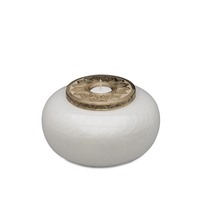
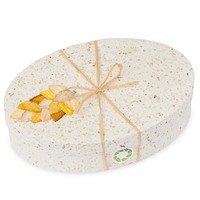
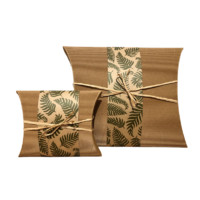
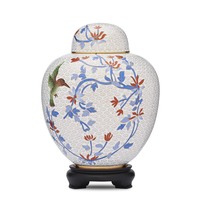
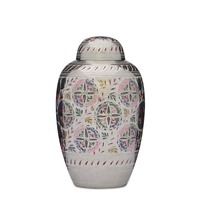
After final grinding, the ashes are placed in a container, which can be anything from a simple cardboard box to a decorative urn. The default container used by most crematoriums, when nothing more expensive has been selected, is almost always a hinged snap-locking box of plastic.

An unavoidable consequence of cremation is that a tiny residue of bodily remains is left in the chamber after cremation and mixes with subsequent cremations.

Ash weight and composition

Cremated remains being scattered at sea

Cremated remains are mostly dry calcium phosphates with some minor minerals, such as salts of sodium and potassium. Sulfur and most carbon are driven off as oxidized gases during the process, although a relatively small amount of carbon may remain as carbonate.

The ash remaining represents very roughly 3.5% of the body's original mass (2.5% in children). Because the weight of dry bone fragments is so closely connected to skeletal mass, their weight varies greatly from person to person. Because many changes in body composition (such as fat and muscle loss or gain) do not affect the weight of cremated remains, their weight can be more closely predicted from the person's height and sex than from their simple weight.

Ashes of adults can be said to weigh from 4 pounds (1.8 kg) to 6 pounds (2.7 kg), but the first figure is roughly the figure for women and the second for men. The mean weight of adult cremated remains in a Florida, U.S. sample was 5.3 lb (approx. 2.4 kg) for adults (range 2 to 8 lb or 0.91 to 3.6 kg). This was found to be distributed bimodally according to sex, with the mean being 6 pounds (2.7 kg) for men (range 4 to 8 lb or 1.8 to 3.6 kg) and 4 pounds (1.8 kg) for women (range 2 to 6 lb or 0.91 to 2.7 kg). In this sample, generally all adult cremated remains over 6 pounds (2.7 kg) were from males, and those under 4 pounds (1.8 kg) were from females.[16]

Not all that remains is bone. There may be melted metal lumps from missed jewellery; casket furniture; dental fillings; and surgical implants, such as hip replacements. Large items such as titanium hip replacements (which tarnish but do not melt) or casket hinges are usually removed before processing, as they may damage the processor. (If they are missed at first, they must ultimately be removed before processing is complete, as items such as titanium joint replacements are far too durable to be ground). Implants may be returned to the family, but are more commonly sold as ferrous/non-ferrous scrap metal. After the remains are processed, smaller bits of metal such as tooth fillings, and rings (commonly known as gleanings) are sieved out and may be later interred in common, consecrated ground in a remote area of the cemetery. They may also be sold as precious metal scrap.

Methods of keeping or disposing of the cremated remains

Cremated remains are returned to the next of kin in a rectangular plastic container, contained within a further cardboard box or velvet sack, or in an urn if the family had already purchased one. An official certificate of cremation prepared under the authority of the crematorium accompanies the remains, and if required by law, the permit for disposition of human remains, which must remain with the cremated remains.

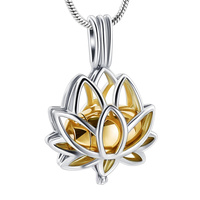
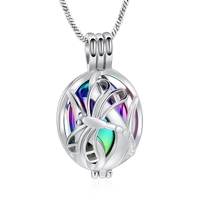
Cremated remains can be kept in an urn, stored in a special memorial building (columbarium), buried in the ground at many locations or sprinkled on a special field, mountain, or in the sea. In addition, there are several services in which the cremated remains will be scattered in a variety of ways and locations. Some examples are via a helium balloon, through fireworks, shot from shotgun shells, or scattered from an airplane. One service sends a lipstick-tube sized sample of the cremated remains into low earth orbit, where they remain for years (but not permanently) before re-entering the atmosphere. Another company claims to turn part of the cremated remains into synthetic diamonds that can then be made into jewelry. Cremated remains may also be incorporated, with urn and cement, into part of an artificial reef, or they can also be mixed into paint and made into a portrait of the deceased. Cremated remains can be scattered in national parks in the U.S. with a special permit. They can also be scattered on private property with the owner's permission. A portion of the cremated remains may be retained in a specially designed locket known as cremation jewelry. The cremated remains may also be entombed. Most cemeteries will grant permission for burial of cremated remains in occupied cemetery plots that have already been purchased or are in use by the families disposing of the cremated remains without any additional charge or oversight.

The final disposition depends on the personal wishes of the deceased as well as their cultural and religious beliefs. Some religions will permit the cremated remains to be sprinkled or kept at home. Some religions, such as Roman Catholicism, insist on either burying or entombing the remains. Hinduism obliges the closest male relative (son, grandson, etc.) of the deceased to immerse the cremated remains in the holy river Ganges, preferably at the holy city of Triveni Sangam, Allahabad, or Varanasi or Haridwar, India. The Sikhs and Punjabi Hindus immerse the remains in Sutlej, usually at Sri Harkiratpur. In southern India, the ashes are immersed in the river Kaveri at Paschima vahini in Srirangapattana at a stretch where the river flows from east to west, depicting the life of a human being from sunrise to sunset. In Japan and Taiwan, the remaining bone fragments are given to the family and are used in a burial ritual before final interment.

Reasons for choosing cremation

Cremation allows for very economical use of cemetery space.

Apart from religious reasons (discussed below), some people find they prefer cremation to traditional burial for personal reasons. The thought of a long, slow decomposition process is unappealing to some;[17] many people find that they prefer cremation because it disposes of the body immediately.[18]

Other people view cremation as a way of simplifying their funeral process. These people view a traditional burial as an unneeded complication of their funeral process, and thus choose cremation to make their services as simple as possible.

The cost factor tends to make cremation attractive. Generally speaking, cremation is cheaper than traditional burial services,[18] especially if direct cremation is chosen, in which the body is cremated as soon as legally possible without any sort of services.

Cremated remains can be scattered or buried. Cremation plots or columbarium niches are usually cheaper than a traditional burial plot or mausoleum crypt, and require less space. Some religions, such as Roman Catholicism, require the burial or entombment of cremated remains, but burial of cremated remains may often be accomplished in the burial plot of another person, such as a family member, without any additional cost. This option is charged for in England in an Anglican church where the fee is set by the Table of Parochial Fees (£36 to incumbent and £78 to church council) a total of £114 in 2010 with a marker charged as extra. It is also very common to scatter the remains in a place which was liked by the deceased such as the sea, a river, a beach or a park, following their last will. This is generally forbidden in public places but very easy to do. Some persons choose to have a small part of their ashes (usually less than 1 part in 1000, because of cost constraints) scattered in space (known as space burial).

Environmental impact

Cremation might be preferable for environmental reasons. Burial is a known source of certain environmental contaminants, with the coffin itself being the major contaminant.[19] Another concern is contamination from radioisotopes that have entered the body before death or burial, although cremation does not seem to be advantageous. For example, one possible source of isotopes is radiation therapy, although no accumulation of radiation occurs in the most common type of radiation therapy involving high energy photons. However, cremation has no effect on radioisotopes other than to return them to the environment more rapidly (beginning with some spread into the air).[20]

Yet another environmental concern, of sorts, is that traditional burial takes up a great deal of space. In a traditional burial, the body is buried in a casket made from a variety of materials. In America, the casket is often placed inside a concrete vault or liner before burial in the ground. While individually this may not take much room, combined with other burials, it can over time cause serious space concerns. Many cemeteries, particularly in Japan[21] and Europe as well as those in larger cities, have run out of permanent space. In Tokyo, for example, traditional burial plots are extremely scarce and expensive,[22] and in London, a space crisis led Harriet Harman to propose reopening old graves for "double-decker" burials.[23]

However, there is a body of research that indicates cremation has a significant impact on the environment as well.[citation needed] The emissions from crematories include nitrogen oxides, carbon monoxide, sulfur dioxide, mercury, hydrofluoric acid (HF), hydrochloric acid (HCl) in addition to persistent organic pollutants


The above information can be credit to Wiki.